Merchant Accounts For New Businesses & Startups
Merchant Accounts For New Businesses & Startups Still Get Approved!
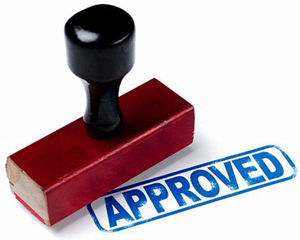 Just because you have a new business or startup company doesn't meant you won't be able to qualify for a merchant account!
All businesses started new at some point and simply because you recently started your business is not, by itelf, any reason for declining a
Frequently Asked Questions — New Business Merchant Accounts
Do I need a business bank account to apply for a merchant account?
Yes. A dedicated business checking account is required — processors deposit funds into it and pull reserves or fees from it. Using a personal account is not permitted and is a red flag in the underwriting process. If you don't yet have a business account, open one before applying.
Can I get a merchant account before my website is live?
For online merchant accounts, most processors require a live, functional website. At minimum, your site needs to be accessible with a product/service description, pricing, contact information, privacy policy, and refund/return policy. An "under construction" page typically results in application delays.
What if I have no credit history for my business?
New businesses with no business credit history are underwritten primarily on the owner's personal credit and the application documentation package. Strong personal credit, healthy personal bank statements, and a thorough application package (business plan, contracts, website) compensate for the absence of business history. Even with challenged personal credit, options may exist — contact us to discuss your specific situation.
Should I expect a rolling reserve as a new business?
Possibly. New businesses — especially those in higher-risk industries or with modest personal credit — may be required to maintain a rolling reserve (typically 5–10% of gross sales held for 90–180 days). Not all new business accounts require a reserve; it depends on the industry, business model, and application strength. Reserve requirements typically decrease or are eliminated after 6–12 months of clean processing history.
merchant application.However, certain things will help you qualify for a merchant account including having a long time in business, established credit card processing history, and larger balances in a bank account, all of which are, unfortunately, lacking for most new businesses.
So, new businesses looking to qualify for a merchant account should be prepared to take a different approach and present documents that help them to appear as more than just a startup business.
Why is this important?
Keep in mind that most new businesses fail in their first year in business and consider how the bank would view the risk of issuing a merchant account to a new business. Visa allows a customer to issues charge back up to six months after a sale (this can be much longer with MasterCard). So, if a merchant wants to charge $20,000/month in volume, at any given time there could be as much as $120,000 in "potential" chargebacks outstanding.
It's highly unlikely that all $120,000 would chargeback, unless in the case of some fraud, however, if the merchant goes out of business a year down the road, and maybe just 10% of that actually results in chargebacks because the company is no longer in business to service the last few weeks of customers, the banks would stand to lose $12,000!
We all know banks hate to lose money and will do everything they can to prevent it including when scrutinizing a merchant application for possible approval.
So, What Do I Do?
To help maximize the chance of approval for a merchant account, a new business should make themselves look like an established business by including with their merchant application things like a business plan (if one exists), copies of vendor/supplier contracts, copies of customer contracts, invoices, sales and/or quality assurance scripts and/or recorded phone calls, etc.
Any documentation that will help prove that you are a real and legitimate business, you really have a business, you really know how to run a business will all help you qualify for a new merchant account.
Get more tips on How To Qualify For A Merchant Account.
Regardless of whether you're an established merchant looking to add a new merchant account or a new business looking for your first merchant account, you should work with an experienced merchant services provider like CyoGate that has expertise in effectively securing and handling merchant accounts.
Retail & Internet Merchant Accounts
An Internet Merchant Account is sometimes referred to as a "MOTO" (Mail Order & Telephone Order) Account because they all require the ability to process a credit card payment when there is no physical credit card present to be swiped. A standard retail "swipe" merchant account does not allow processing of these "card-not-present" transactions.
High Risk Merchant Accounts
If the domestic banks are denying your merchant application because they believe your industry is considered high risk, CyoGate can help! We have an offshore network of merchant processing partners that enable us to provide low cost, high risk merchant solutions to a much wider range of businesses and industries.
Internet Payment Gateway
The CyoGate Internet Payment Gateway offers one of the quickest and most cost effective ways to accept and process credit card and electronic check payments online. Our payment gateway works with most existing merchant accounts and supports hundreds of popular web shopping carts and eCommerce platforms.
Take Your Business to the Next Level
Find out how our innovative payment solutions can benefit your business. Reach out to us for more information or to get started!
Let’s Get Started